
Ahead of Sweden’s 2026 election, Officerstidningen asked the parliamentary parties how they want to shape the country’s military defense as Sweden expands the Armed Forces and adapts to NATO membership. Here are some of the most important stances directly related to conscription.
Recruitment and retention
The Social Democrats want to expand the number of conscripts, bring back regular refresher exercises, speed up officer training, and make it easier for reserve officers to serve. The Sweden Democrats talk mainly about better benefits and career incentives, but give no concrete conscript-specific recruitment measure. The Moderate Party wants to keep Sweden’s mixed model of conscripts, employed soldiers, and officers, while training more conscripts and making military education useful on the civilian job market. The Left Party focuses on pay, working conditions, equipment, and bureaucracy, but does not make conscription the centre of its answer. The Centre Party says more conscripts are a useful recruitment base, but only if training is meaningful, equipment works, conditions are reasonable, and the conscript environment is safe enough to make people want to stay. The Christian Democrats emphasize better conditions, clearer careers, family-friendly terms, and civilian merit value, rather than a detailed conscript pipeline. The Green Party wants more conscripts to continue into GSS, officer, reserve officer, or voluntary-defense roles, with special emphasis on reducing discrimination and harassment. The Liberals focus on better terms, more training places, clearer careers, and less administration, but say little specifically about conscripts in this answer.
How many conscripts?
The Social Democrats set the clearest numeric target: at least 12,000 conscripts starting training by 2030, and eventually 20,000 per year. The Sweden Democrats say the current plan should continue for now, although they would like more conscripts if limits on officers, infrastructure, and shooting ranges allowed it. The Moderate Party wants more conscripts than today, arguing that NATO membership and the security situation require a bigger wartime organization. The Left Party simply supports the existing plan. The Centre Party backs the current targets and is open to further increases, but warns that expansion must not outrun the Armed Forces’ ability to preserve training quality. The Christian Democrats back the current timetable and add a long-term vision in which essentially all young people complete either military or civilian defense training. The Green Party supports increasing conscript numbers according to the current plan, but stresses quality, housing, officers, equipment, support, gender neutrality, and motivation. The Liberals say the cohorts must grow so Sweden can fill the wartime organization, build endurance, and become a real net contributor to NATO security.
Conscript use in NATO missions and obligations
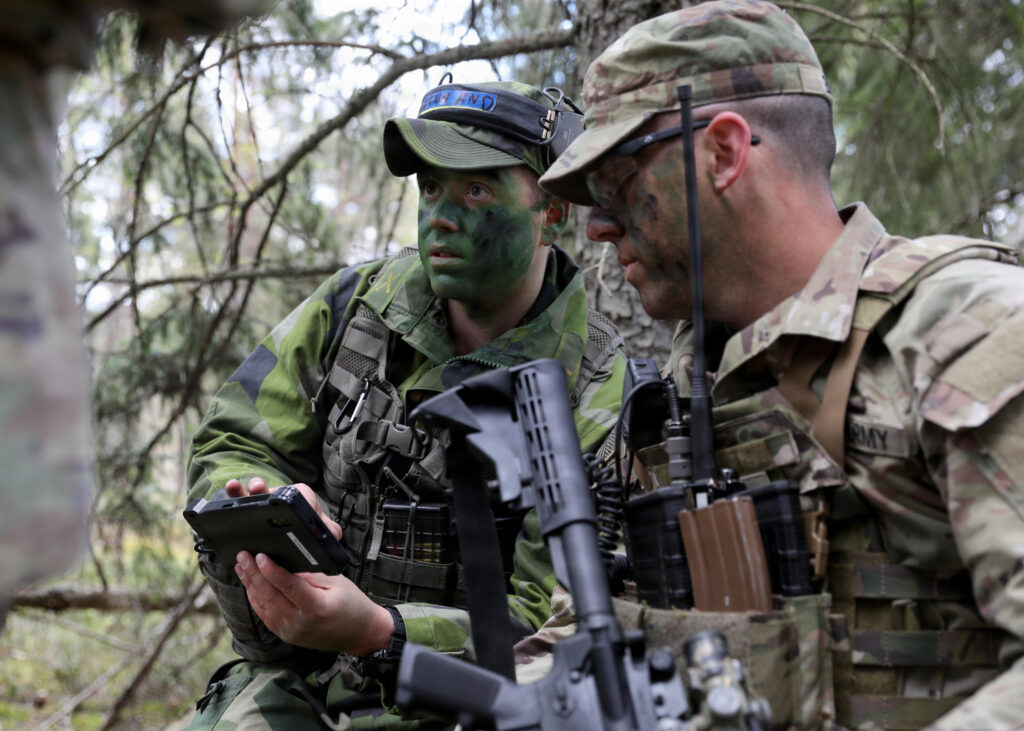
The Social Democrats say conscripts still in basic training should not be sent abroad in wartime, but trained and war-placed conscripts should be usable within their unit’s tasks. The Sweden Democrats have not fully decided and want the issue handled by a parliamentary committee, while saying high-risk tasks should generally go to experienced employed units. The Moderate Party says yes, conscripts have a central role in NATO-relevant wartime units, but the rules for exercises and peacetime missions must be clearer. The Left Party says conscripts should not be pulled into NATO missions in peacetime, especially when many have civilian jobs and families, and that foreign deployments should use employed soldiers. The Centre Party wants the rules clarified through investigation, especially the distinction between war, peacetime missions, and exercises. The Christian Democrats say conscripts can already be sent on NATO operations abroad in war and on peacetime exercises, while the use of conscripts still in basic training is under review. The Green Party is skeptical of using conscripts in NATO peacetime operations, but says it could be relevant in war or heightened alert, for example after an attack on Finland, provided they have completed basic training. The Liberals say Swedish conscripts must be able to contribute to NATO defense when required, especially in Sweden’s neighborhood.
Read the entire piece in Officerstidningen.
Fundamentally, none of the parties is willing to acknowledge any of the very real costs of a dysfunctional conscription system that has since become a sacred institution. Who dares question its sanctity?