
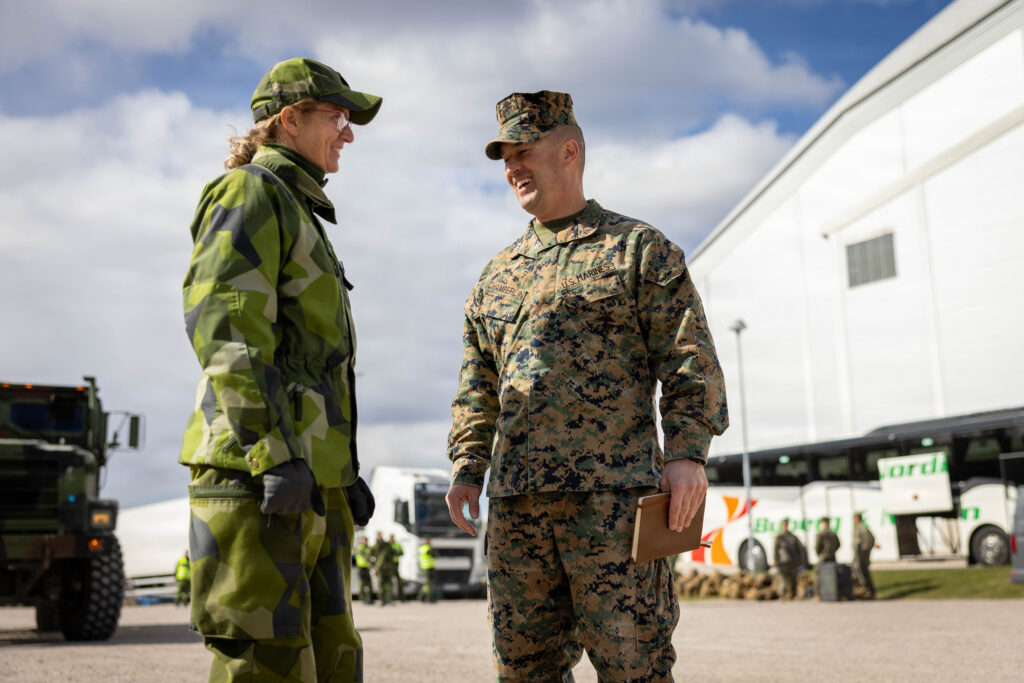
The share of women selected for Swedish military service has fallen from 24 percent in 2022 to 16 percent in both 2025 and 2026, leaving the Armed Forces far short of its 30 percent target. Although the total number of female conscripts has increased, male recruitment is expanding faster. The Swedish Defence Conscription and Assessment Agency attributes much of the disparity to physical-strength requirements for combat roles: women who do not meet them must compete for fewer support, logistics and staff positions. The Armed Forces says it will not lower occupational standards but is considering targeted twelve-week training programmes to help more applicants qualify.
This is the central inequality tension at the heart of conscription. Even systems presented as gender neutral in practice still place the burden overwhelmingly on one sex, with rarely any females actually being compelled into service. In that sense, Nordic conscription remains a gendered tax of illusory equality.
To make conscription perfectly equal would be to make it militarily counterproductive. Yet the version most useful for defence cannot be reconciled with any serious notion of equality. The only non-discriminatory option is to pay soldiers properly for their service, recruit voluntarily and fund defence through broad-based taxation, so the costs are shared by the entire society.
What is more, as our report shows:
“The support for conscription among young women has also seen a sharp decline in spite of the heightened security climate.95 Seven in ten young women surveyed expressed a negative view of compulsory service. The Armed Forces’ campaigns to recruit more women have, by their own account, not reversed the trend. While interest in conscription has risen among young men, it has moved in the opposite direction among young women. In that sense, the reform extending defence obligations has so far failed, and appears instead to have only deepened the divide in attitudes toward military service.”
Gender neutral conscription is an abject failure.
Read the entire piece in SVT Nyheter.