Authoritarian regimes can enforce army loyalty – even when soldiers are required to serve.
Written by Max Z. Margulies and Emily Stranger
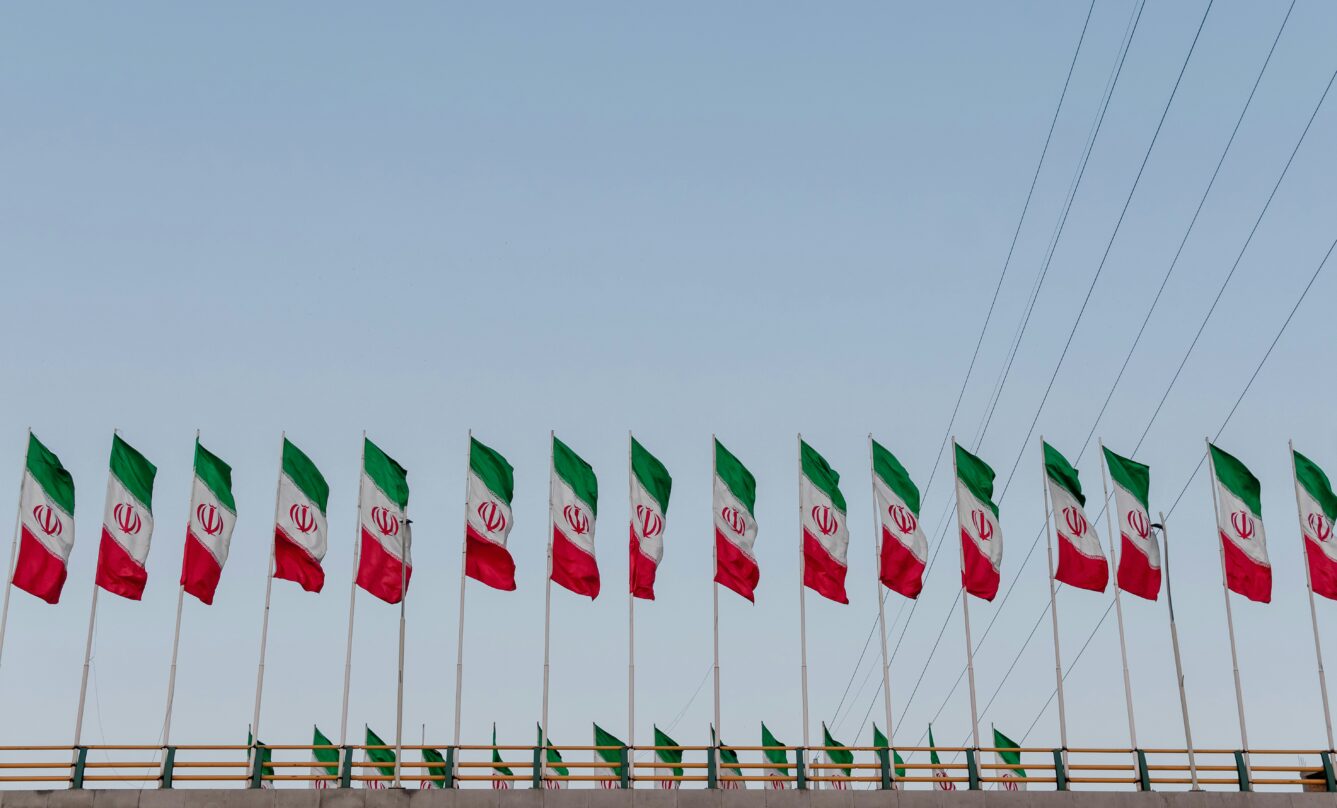
The death toll from Iran’s violent repression of protesters has few parallels in modern history. The regime officially acknowledged several thousand fatalities. More recent reports suggest that tens of thousands were killed in the widespread protests from late December to mid-January.
By early February, the Iranian regime appeared to regain control. Yet this was not an obvious conclusion. Many commentators expressed doubt that Iran’s regime could survive. Indeed, the Iranian government’s apparent survival and reassertion of control sit uncomfortably with much of the scholarship that emerged after the 2010-2011 Arab Spring. This consensus holds that the elite-military bargains sustaining authoritarian regimes can collapse when faced with mass protests, especially in countries with conscript militaries – like Iran. While some prominent examples seem to fit this pattern, research suggests caution before drawing too many conclusions about the relationship between conscription and regime stability.
What does research say about conscription and protest repression?
Conscript armies, in theory, are more likely to defect from the regime because of their close ties to society. The logic here seems intuitive: Armies will refuse orders to shoot at protesters or intervene to overthrow rulers who respond to protests with too much violence. Some research suggests that this expectation can even drive protester behavior.
The reality is more complex. Despite isolated accounts of Iranian soldiers refusing to fire on protesters, there is little evidence to support the notion that conscript militaries systematically insulate protesters from violence, as recent research by one of us has shown. Using events data to identify more than 36,000 protest day events worldwide from 1997 to 2015, we found no difference between the use of violent repression during protest responses by conscript versus volunteer armies. Surprisingly, we also found that conscript armies were more likely than volunteer armies to deploy in response to protests. And we found only weak, highly contingent evidence for greater restraint being shown by more inclusive militaries (as measured by the military participation rate) – a finding we attribute to a propensity toward violence by smaller and less-inclusive militaries, rather than restraint by inclusive ones.
Security forces are a diverse toolkit, by design
There are several reasons why this is the case. First, governments rarely implement conscription as widely or successfully as intended. Significant portions of the population are often excluded from military service. Sometimes this is due to policies that exclude groups a government perceives as disloyal to the regime. At other times it is because of legal exemptions or deferments – or reflects weak enforcement, corruption, and patrimonial ties. Any of these factors can result in conscript militaries whose soldiers identify more with the regime than with protesters.
In Iran, conscription is widespread and well-enforced. While 1 to 2 years of military service is mandatory for all Iranian men when they turn 18, some avoid service, typically through medical conditions, professional and governmental training programs, and familial obligations. Until recently, people could legally pay for these exemptions, and it is still common for wealthier Iranians to bribe their way out of military service. Many conscripts are assigned to noncombat roles and some, like religious minorities, are legally prohibited from serving in leadership roles. This provides the Iranian military some latitude in ensuring that conscripts are more likely to obey orders and less likely to defect from the regime.
Second, governments don’t need to rely on their militaries to repress protests. Although a conventional army is often a country’s largest and most capable security force, this is not necessarily the case. Many countries also create highly effective parallel forces to counter-balance the military. These forces are often made up of the soldiers most likely to remain loyal to the regime. In many cases, these forces receive better funding, equipment, and training. This means autocratic rulers can use these paramilitaries, presidential guards, and other units in tandem or as a replacement for regular forces, for both routine security and particularly severe protests.
This is certainly true of Iran’s regime, which has a conventional army (Artesh) and the Islamic Revolutionary Guard Corps (IRGC). The IRGC was created following the 1979 Islamic Revolution specifically to protect the nascent Islamic regime from Shah loyalists and armed oppositional groups. Unlike the Artesh, the IRGC has a special forces branch – the Quds Force – as well as a domestic paramilitary organization, the Basij. The Basij, often recruited via the personal networks of Iranian intelligence officials, is routinely accused as bearing primary responsibility for perpetrating violence against protesters. Both the Quds force and Basij undergo intense ideological, political, and military training to vet soldiers’ loyalty to the regime. In addition, some online updates have reported that the regime bussed in proxy militias from Iraq to aid in protest suppression. These foreign-born militiamen have no loyalty to Iranian protesters, or a stake in the domestic agenda of anti-regime protests.
And third, while only a small portion of protest events recorded in our dataset see a response from the regular military, the probability that the military will use violent repression once it is deployed is quite high regardless of the military’s composition. This finding merits more exploration, but here’s one possible explanation: Regimes that are the most likely to deploy the military domestically might be more accepting of violent repression. This might reflect a more militarized culture, lower regime capacity, or possibly the ease with which leaders can frame protesters as outsiders and a threat to national security.
The regime in Iran does seem hesitant to use Artesh against protesters. However, Artesh was deployed to secure some locations, and there are no signs that its support for the regime has weakened significantly. The Iranian government has long fostered a narrative that frames protesters as national security threats spurred by outside agitators. For example, during the most recent protests, a Telegram channel titled “Quds Force News,” with over 400,000 subscribers, published videos depicting rioters allegedly burning mosques and killing children. Other accounts described protesters as Mossad-trained operatives.
The government has also praised security personnel and civilians killed during the protests as martyrs. This is a powerful ideological framing with religio-cultural significance, and provides the rhetoric to legitimize regime violence. Similar rhetoric emerged during the 2022 protests, when over 500 civilians were reportedly killed protesting the beating death of 22-year-old Mahsa Amini.
While this type of rhetoric may not persuade the average Iranian, it can be enough to reduce sympathy for the protesters. And it can also instill a minimal level of obedience within the security forces, where social pressure and fears of retribution are particularly effective at keeping rank-and-file troops in line.
Unfortunately, the violence against protesters in Iran follows a well-worn pattern, in Iranian history and globally. Conscription systems vary widely around the world in terms of their institutional design and legitimacy, and authoritarians have an array of tools to suppress protests and incentivize loyalty. But any move by the military to side with either protesters or the regime in power can be difficult to predict, regardless of the composition of the military forces.
The views expressed here are the authors’ and do not reflect official positions of the United States Military Academy, Department of Defense, or United States Government.
Max Margulies is a political scientist and an associate professor in the Department of History and War Studies at the United States Military Academy. He studies conflict, strategy, civil-military relations, and military recruitment.
Emily Stranger is the senior Theater Engagement and Regional Expertise instructor for the 1st Special Forces Command (Airborne) Regional Expertise and Culture program (REC). She holds a PhD in Central Eurasian Studies from Indiana University (2025).
“Why Iran’s conscript army didn’t side with protesters” by Max Z. Margulies and Emily Stranger, originally published February 5, 2026 on Good Authority. Licensed under CC BY-ND 4.0. No changes were made.
Source: https://goodauthority.org/news/why-irans-conscript-army-didnt-side-with-protesters