
1

Prevalence of Adverse Behaviors among Young Military Conscripts in Taiwan
Nain-Feng Chu, Der-Min Wu, Muh-Han Shen, Yaoh-Shiang Lin, Prevalence of Adverse Behaviors among Young Military Conscripts in Taiwan, Military Medicine, Volume 171, Issue 4, April 2006, Pages 301–305, https://doi.org/10.7205/MILMED.171.4.301
2

Conscription hurts: The effects of military service on physical health, drinking, and smoking
Dirk Bethmann, Jae Il Cho,
Conscription hurts: The effects of military service on physical health, drinking, and smoking,
SSM - Population Health,
Volume 22,
2023,
101391,
ISSN 2352-8273,
https://doi.org/10.1016/j.ssmph.2023.101391.
(https://www.sciencedirect.com/science/article/pii/S2352827323000563)
Abstract: Almost all South Korean men serve in the country's armed forces for two years. In this paper, we investigate whether the military service affects the health of draftees. Using an event study design, we use the conscription years to identify the effect the military service has on soldiers' physical health as well as on their smoking and drinking behavior. Our results show that the compulsory military service has a strong and long-lasting negative effect on physical health. Moreover, people who are drafted into the armed forces are more likely to consume more alcohol and cigarettes even years after they are discharged.
3

South Korean Military Service Promotes Smoking: A Quasi-Experimental Design
Allem, J. P., Ayers, J. W., Irvin, V. L., Hofstetter, C. R., & Hovell, M. F. (2012). South Korean military service promotes smoking: a quasi-experimental design. Yonsei medical journal, 53(2), 433–438. https://doi.org/10.3349/ymj.2012.53.2.433
4

The Impact of Military Service on Young Men′s Smoking Behavior
E. Schei, A.J. Sogaard,
The Impact of Military Service on Young Men′s Smoking Behavior,
Preventive Medicine,
Volume 23, Issue 2,
1994,
Pages 242-248,
ISSN 0091-7435,
https://doi.org/10.1006/pmed.1994.1033.
(https://www.sciencedirect.com/science/article/pii/S0091743584710334)
Abstract: In a cross-sectional study of 2,112 Norwegian army conscripts ages 18 to 25, the prevalence of daily smoking was 50.9%. Among the smokers, 55.7% had increased smoking during military service, and 7.8% of the nonsmokers had started to smoke. These changes in smoking behavior were correlated with having a best friend who smoked, with dissatisfaction with the military service, with physical inactivity, and with frequent alcohol consumption. Ninety percent lived in dormitories where cigarette smoking occurred regularly. Attitudes toward smoking restrictions were determined mainly by the subjects′; smoking behavior and subjective discomfort caused by cigarette smoke. Smokers as well as nonsmokers having a best friend who smoked were significantly less bothered by cigarette smoke than others. The findings support the conclusion that military service has a negative influence on the smoking behavior of young Norwegian men.
5
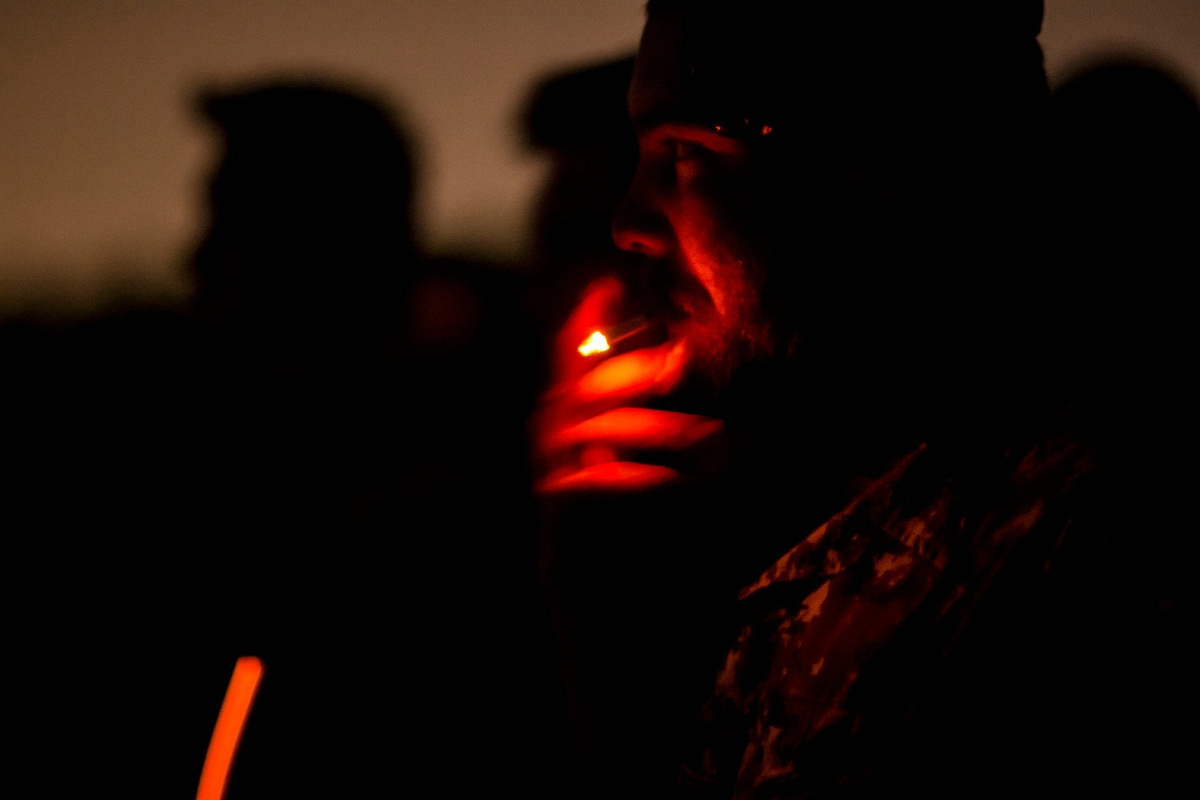
Nutrition and other lifestyles of conscripts and health risk factors during service : Six-month follow-up study
Absetz P, Uutela A, Jallinoja P, Suihko J, Bingham C, Kinnunen M et al. Varusmiesten ravitsemus ja muut elintavat sekä terveyden riskitekijät palveluksen aikana : Kuuden kuukauden seurantatutkimus. Helsinki: Terveyden ja hyvinvoinnin laitos, 2010. (Raportti/Terveyden ja hyvinvoinnin laitos; 16/2010). https://www.julkari.fi/items/00d6cfe3-2285-4bb5-9453-356337553fec
6
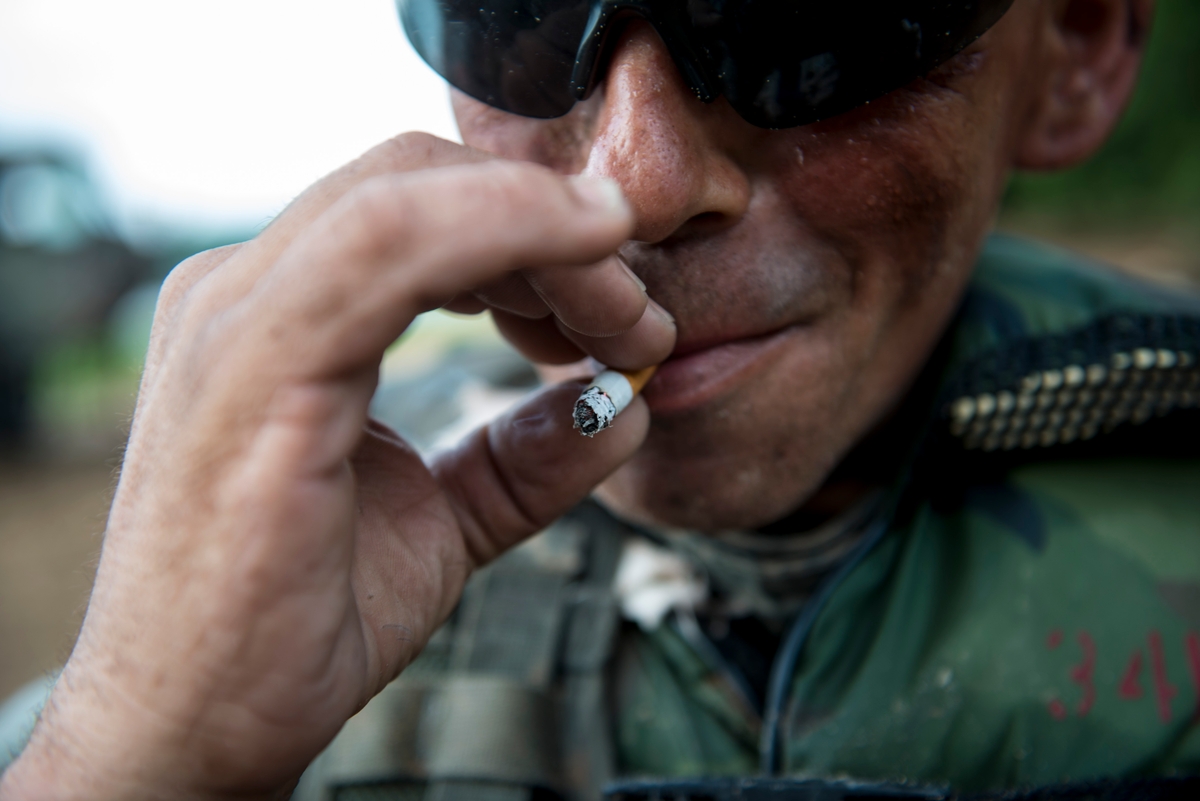
Use of smokeless tobacco among conscripts: A cross-sectional study of Norwegian army conscripts
Edvin Schei, Vinjar Fønnebø, Leif Edvard Aarø,
Use of smokeless tobacco among conscripts: A cross-sectional study of Norwegian army conscripts,
Preventive Medicine,
Volume 19, Issue 6,
1990,
Pages 667-674,
ISSN 0091-7435,
https://doi.org/10.1016/0091-7435(90)90063-P.
(https://www.sciencedirect.com/science/article/pii/009174359090063P)
Abstract: In a cross-sectional study of 2,112 Norwegian army conscripts ages 18 to 25 years, 10% reported daily use of wet snuff, while 23% were occasional users. Nearly half of the snuff users had started or increased their consumption during the military service. Cigarette smoking, alcohol consumption, and having a best friend using snuff were positively correlated with starting to use snuff. Daily use was associated with high physical activity. Use of snuff did not vary significantly with length of education when adjusting for other variables. Nearly all subjects believed prolonged snuff use to be a hazard to health. Forty percent of the snuff users believed they would give up snuff after the military service. Giving up during the service was statistically associated with having a steady relationship with a girlfriend and with length of time served. The relatively high percentage of occasional users and the high rate of stopping and starting reflect the novelty of snuff use among Norwegian youth. The widespread intention to give up seems to indicate that a large proportion of snuff users have ambivalent attitudes toward their own behavior.